Zodiac Casino UK Guide
Complaint evidence and escalation – 11 September 2026
Zodiac Casino Complaints: What Player Reports Show and How to Escalate
 Available in GB
Current Zodiac Casino complaint archives show a mixed record rather than one simple verdict. AskGamblers currently lists cases marked Resolved alongside cases marked Rejected and Unresolved, with withdrawals, identity checks, account access and payment handling appearing repeatedly in the complaint descriptions. That is useful for spotting the kinds of friction a player may encounter, but it does not show how common those problems are across all Zodiac customers. A complaint archive is a self-selecting sample of people who had a reason to complain. If you have a real issue, use evidence rather than review scores: save transaction details, contact Zodiac’s 24/7 support, and escalate an unresolved complaint to [email protected]. For Great Britain disputes, Gambling Commission guidance says the operator’s complaints process must be used first; unresolved disputes can then move to an Alternative Dispute Resolution provider after the internal process reaches its end or the eight-week limit in current practice.

Table of Contents
- What the current Zodiac complaint archive actually shows
- Withdrawal and verification complaints need context
- Start with support, then make the complaint explicit
- The Great Britain escalation route after an operator complaint
- Why review scores are weaker evidence than a complaint trail
- How to structure a complaint so the evidence can be reviewed
- How to use complaints evidence without overstating Zodiac’s record
What the current Zodiac complaint archive actually shows
The strongest conclusion from the current AskGamblers archive is not that Zodiac “always pays” or “never pays”. The archive contains different outcomes. Examples labelled Resolved include disputes about a missing withdrawal after verification and a delayed payment. Examples labelled Rejected include complaints about an unpaid later instalment and slow or absent responses after documents were submitted. The same archive also contains older unresolved cases.
Those labels matter because they stop the evidence being cherry-picked. A resolved complaint shows that at least one reported dispute reached a resolution through that channel. A rejected complaint shows that the complaint service did not uphold or complete another case. Neither outcome tells us the rate of problems among the much larger population of players who never submit a public complaint.
What the archive can show: Withdrawal and verification issues recur in individual reports.
What it cannot show: How frequently those issues occur across all Zodiac withdrawals.
What the archive can show: Some submitted cases are marked Resolved and others Rejected or Unresolved.
What it cannot show: That every complaint was decided on the merits by a regulator or court.
What the archive can show: Players sometimes describe delays, document requests and account-access problems.
What it cannot show: That the same outcome will happen to a new player.
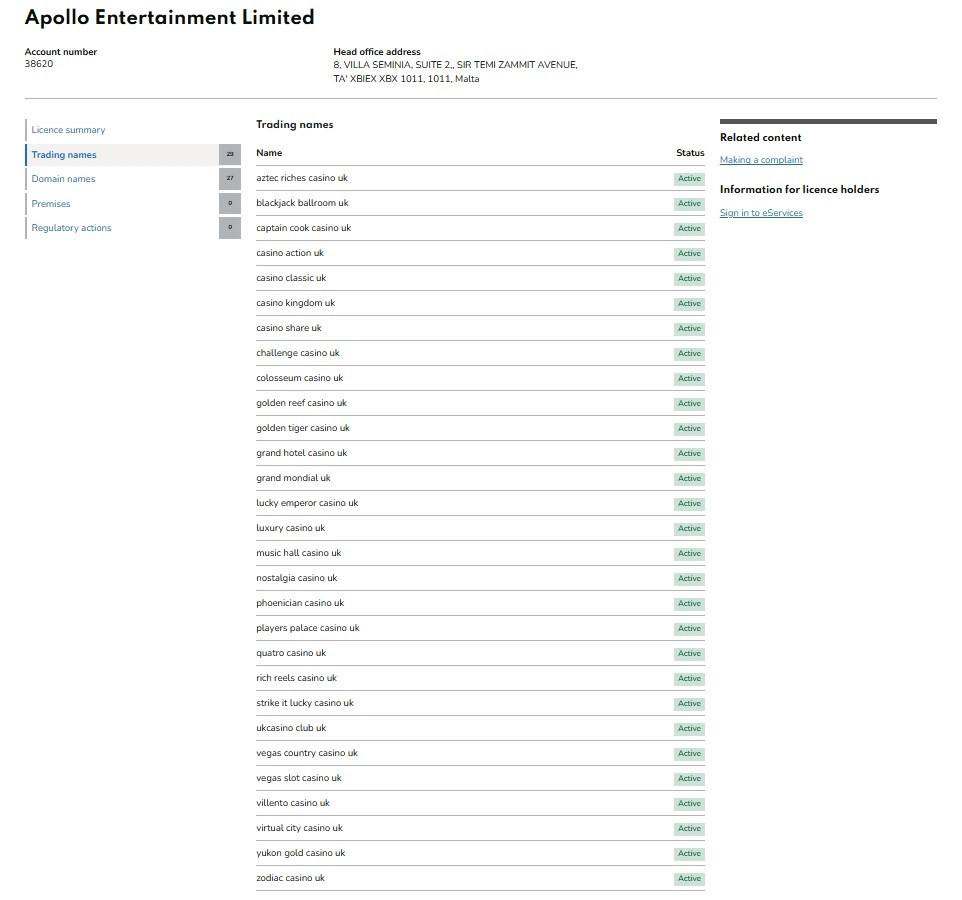
For the broader operator and regulator context, use the UKGC licence and trust. It checks the active Great Britain register record rather than relying on reputation comments alone.
Withdrawal and verification complaints need context
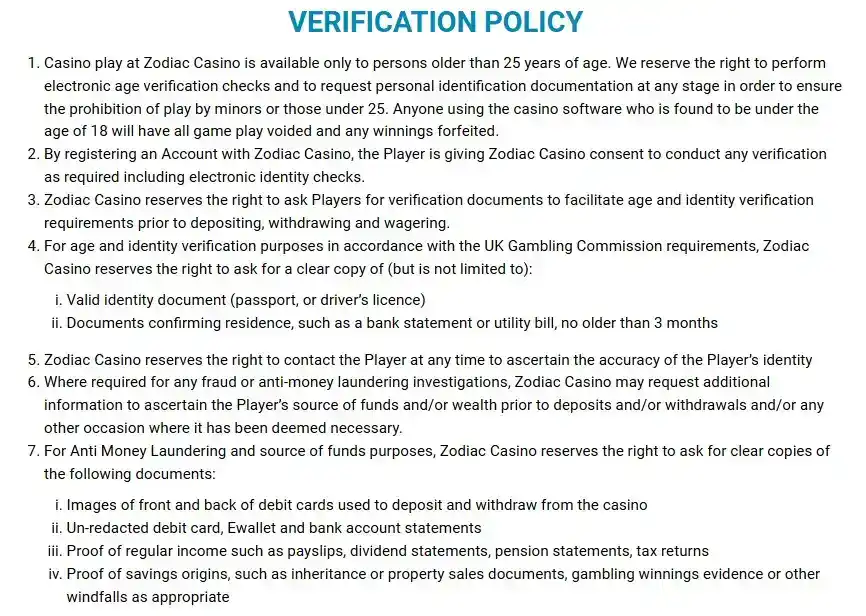
Withdrawal complaints are especially easy to misread because several different events can look identical from the player’s side. A payout may be waiting on identity checks, a payment method may require extra ownership evidence, an account may be under review, or there may be a genuine service delay. Zodiac’s verification policy allows identity and payment-account checks, and a withdrawal may be held until satisfactory verification is completed.
That does not make every delay reasonable, but it changes what evidence matters. Before escalating, compare the disputed transaction with the withdrawal process and the KYC and verification. Those pages separate normal verification requirements from details that should be challenged when the account history and support responses do not line up.
Evidence worth saving before you complain
- Withdrawal or deposit date, amount and payment method.
- Transaction IDs or cashier records that do not expose unnecessary personal data.
- Dates and copies of support conversations.
- Which documents were requested and when they were submitted.
- The exact outcome you want, such as release of a withdrawal or a written explanation.
Start with support, then make the complaint explicit
Zodiac’s UK information states that customer support is available 24/7, and live chat is available. For a first contact, support can be useful when the problem may be operational rather than a formal dispute. Keep the conversation focused on the transaction, account event or term you need explained.
If support does not resolve the issue, Zodiac’s UK terms list [email protected] for escalated complaints. Put the word “complaint” in the message, give a concise timeline, attach the relevant evidence and state the remedy you are asking for. Do not rely on repeated chat sessions as a substitute for a formal complaint if the dispute has become substantive.
For deposit or cashier context before writing, the payment methods explains which payment facts are currently confirmed and which details depend on the logged-in cashier.
The Great Britain escalation route after an operator complaint
The Gambling Commission’s current complaints guidance gives a clear sequence for Great Britain. First, complain directly to the gambling business and follow its complaints policy. Include dates, times, amounts and supporting evidence, and keep copies of what you send. The operator has up to eight weeks from receiving the complaint to complete its process, although it may reach a final position sooner.
If the dispute remains unresolved at the end of that process, you may be able to take it to an Alternative Dispute Resolution provider. The operator should tell you which ADR provider to use and provide the relevant contact details or a deadlock/final-response letter. The Gambling Commission itself does not decide individual transaction disputes.
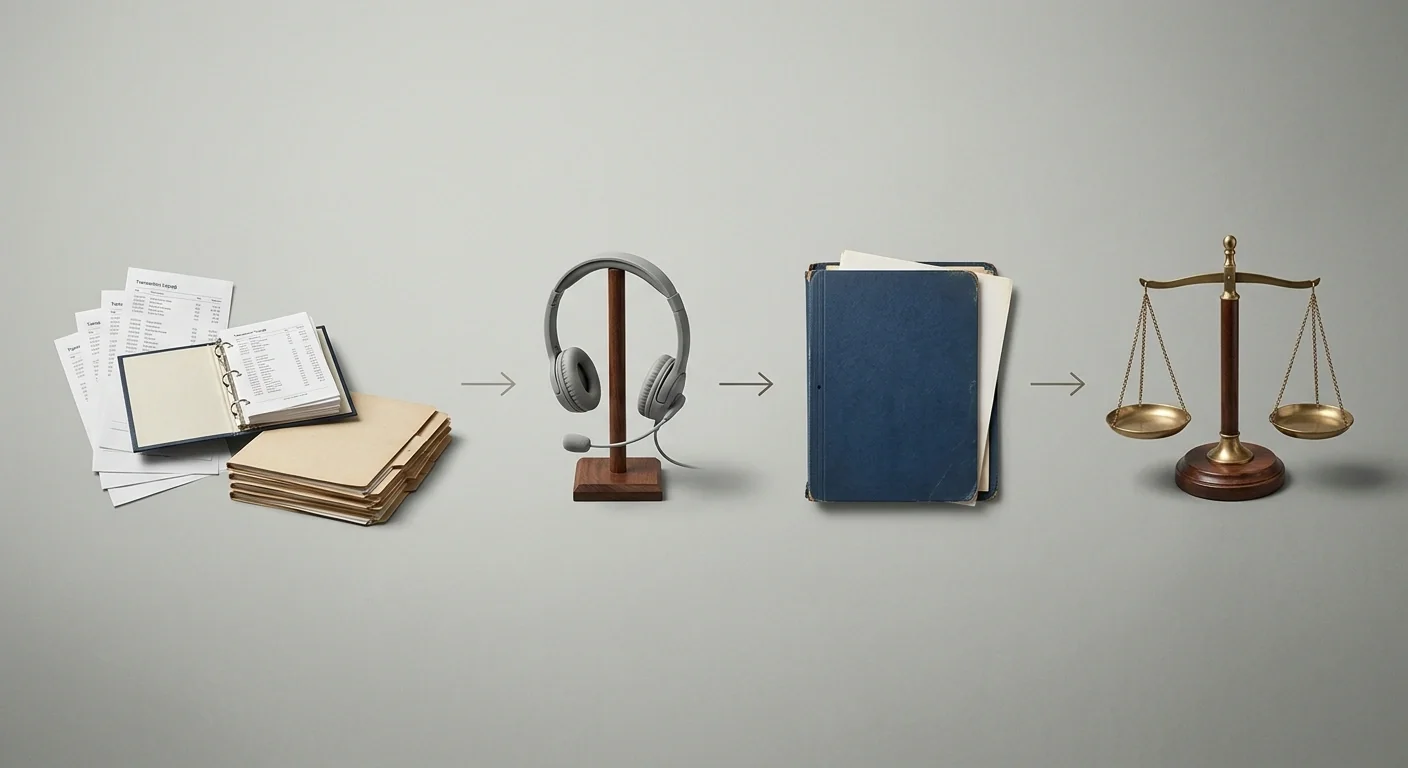
- Document the issue. Build a dated record before memories and chat histories become harder to reconstruct.
- Contact Zodiac support. Use the 24/7 support channel for an initial attempt to fix or explain the issue.
- Escalate formally. If unresolved, send the complaint to [email protected] with the evidence and requested remedy.
- Keep the final response. It matters if the dispute later moves to independent ADR.
- Use ADR when eligible. After the operator process ends, or after eight weeks if unresolved, follow the ADR details the operator provides.
The regulator’s current public guidance is available on the Gambling Commission complaints page.
Why review scores are weaker evidence than a complaint trail
A dynamic star score compresses different experiences, countries and time periods into one number. It can also change after this page is published. That makes it a poor basis for a specific conclusion about a current UK withdrawal or verification dispute. Complaint records are still imperfect, but they at least expose the allegation, the response history and the case status.
The same discipline applies in both directions. Positive player reviews do not prove that a future payout will be frictionless, and negative reviews do not prove systemic non-payment. A better decision combines the active operator/licence record, the current account terms, your own transaction evidence and the documented complaint path. The Zodiac Casino UK review brings those areas together without turning one reputation source into the whole assessment.
How to structure a complaint so the evidence can be reviewed
A strong complaint is easier to assess when it separates the event from the conclusion. Start with a short timeline: when the deposit or withdrawal was requested, when verification was requested, when documents were supplied, and when support replied. Then identify the specific point still in dispute. This creates a record that can be compared with the account history instead of forcing the recipient to reconstruct the case from several chat conversations.
Keep the evidence proportional to the issue. A transaction reference, the relevant cashier record, dated support replies and the list of requested verification documents are more useful than a long summary of unrelated player reviews. If the dispute concerns verification, state what was requested and when it was provided. If it concerns a withdrawal, state the amount, method and current status without assuming that another player’s public timeline predicts your own.
The requested outcome should also be explicit. Examples include asking for the withdrawal to be processed, asking for a written explanation of what remains outstanding, or asking the operator to confirm that the internal complaints process has reached its final position. A clear requested remedy does not guarantee a favourable result, but it makes the complaint easier to answer directly.
Finally, keep support contact and formal escalation distinct. Live chat is useful for an initial operational check, while [email protected] is the verified escalation contact in the UK terms. If the matter remains unresolved, preserve the operator’s final response or the record showing how long the complaint has been open because that material can matter if the dispute later moves to ADR. This evidence-led approach is more useful than trying to prove the case through a dynamic review score or a collection of unrelated anecdotes.
How to use complaints evidence without overstating Zodiac’s record
Zodiac’s public complaint history is useful because it highlights recurring points of friction – especially withdrawals, verification and account handling – and because it contains more than one outcome type. Its limitation is equally important: people who submit complaints are not a representative sample of everyone who plays. Treat the archive as a map of issues to investigate, not a frequency table or a verdict on every payout.
If you are dealing with a live dispute, the practical sequence is more valuable than the overall tone of reviews. Preserve the transaction trail, use support, make a formal complaint when needed, and follow the Great Britain ADR route if the operator process does not resolve the dispute. That creates a record that can be assessed on evidence rather than on competing anecdotes.
Published by the Zodiac Casino team.